Cartilage Piercing Near Me — Find a Helix & Ear Cartilage Piercer & Book Online
Booksy connects you with the best cartilage piercing specialists near you — professional piercers experienced in all cartilage placements including helix, tragus, daith, conch, rook, flat, orbital, anti-tragus, forward helix, and industrial piercing. Browse verified portfolios, compare prices, and book your cartilage piercing appointment online in seconds, any time of day. Find a trusted, needle-only piercer near you and build the curated ear you've been planning.

Cartilage Piercing - around you
Cartilage Piercing - customer reviews


Cartilage Piercing Placements — A Complete Guide
Cartilage piercing covers a wide range of specific ear placements — each with its own anatomy, healing time, jewelry requirements, and aesthetic character. Here's a guide to every cartilage piercing available at professional piercers on Booksy.
What is cartilage piercing?
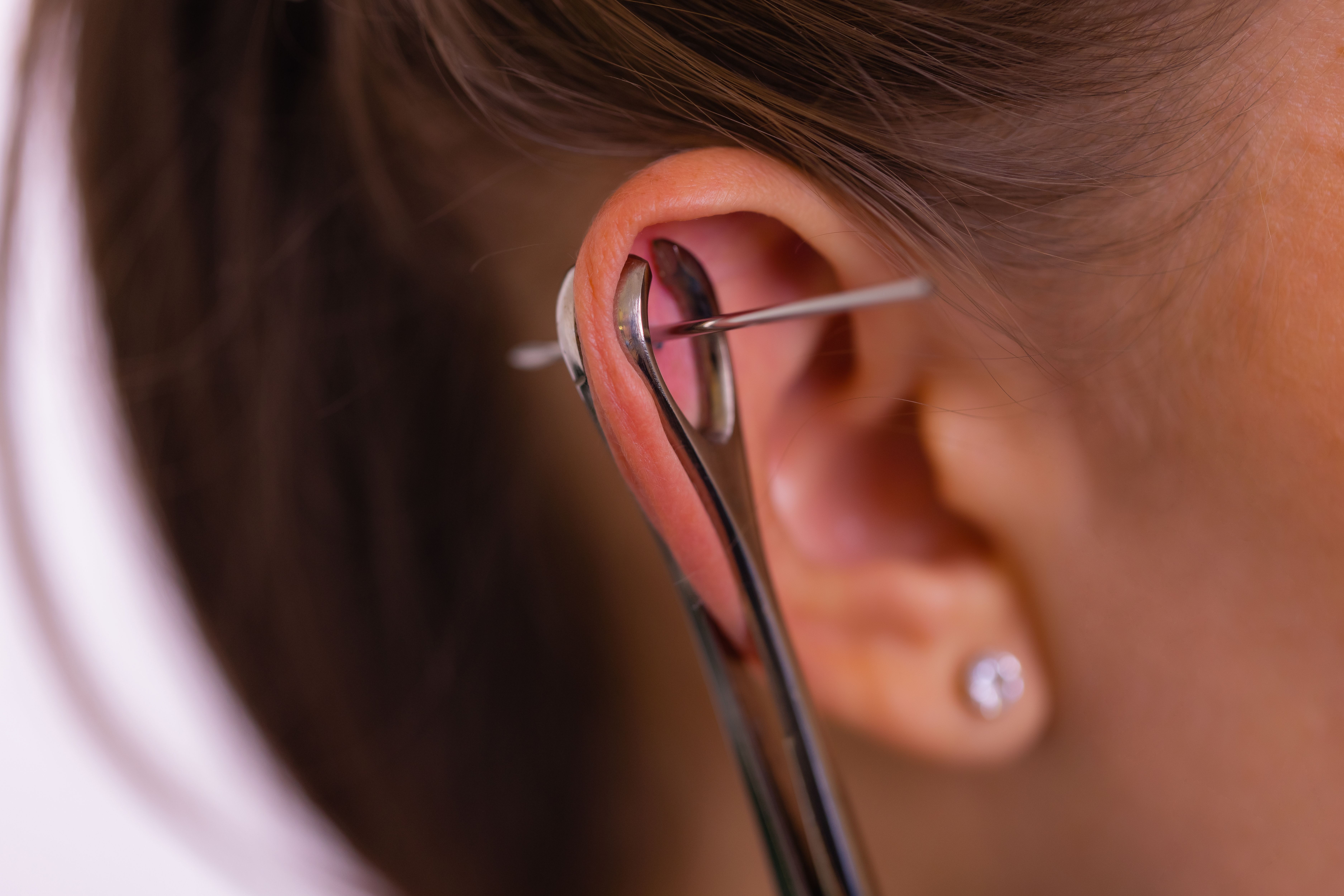
Cartilage piercing refers to any ear piercing that passes through the firm cartilage of the ear rather than the soft earlobe. Cartilage is significantly denser and less vascular than soft tissue — it heals more slowly (6 to 12 months vs 6 to 8 weeks for lobes), is more prone to complications if improperly pierced, and requires specific jewelry sizing and aftercare. Cartilage piercings must always be performed with a sterile hollow needle — never with a piercing gun. The blunt-force trauma of a gun shatters cartilage, creating microscopic fractures that can cause prolonged healing issues, hypertrophic scarring (bumps), and chronic pain. A professional piercer on Booksy will always use a needle. When researching where to get a cartilage piercing, look specifically for piercers who state they use needles only.
Helix piercing
The helix is the outer curved rim of the ear — the most widely pierced cartilage location and the most popular ear piercing after the earlobe. A single helix piercing sits anywhere along the outer rim; double or triple helix piercings stack two or three piercings along the same curved rim. The forward helix sits at the very front of the helix where it meets the face — a smaller, flatter placement typically worn with a tiny flat-back labret stud. Helix piercings heal in 6 to 9 months with consistent aftercare. Initial jewelry is a flat-back titanium labret or a small ring — curved barbells and heavy hoops are not appropriate starting jewelry. Priced at $40 to $60 at most piercers on Booksy.
Tragus piercing
The tragus is the small, pointed cartilage projection that partially covers the ear canal opening. Tragus piercings typically wear a small flat-back labret stud or a tiny seamless ring — both sit flush against the flat surface of the tragus. It is a compact, understated placement that looks particularly elegant with minimalist jewelry. Healing takes 6 to 12 months. Not suitable for clients who frequently use earbuds or over-ear headphones during the healing period — pressure on the tragus from headphones significantly impairs healing and increases the risk of irritation bumps. Priced at $40 to $70.
Daith piercing
The daith is the innermost fold of cartilage at the ear canal opening — the curved ridge that sits just above the ear canal. Daith piercings typically wear a seamless ring or a curved barbell that follows the natural curve of this fold. It is one of the more technically demanding cartilage placements — the anatomy varies significantly between individuals and the placement requires a piercer experienced with curved tissue. Healing takes 6 to 12 months. The daith has been informally associated with migraine relief in some clients — while clinical evidence is limited, some people do report reduced migraine frequency. Priced at $50 to $75.
Rook piercing
The rook pierces the anti-helix — the ridge of cartilage running along the inner upper ear, between the outer helix and the conch. It is a horizontal piercing through a fold of cartilage — visible from the front at the top inner ear. Initial jewelry is a curved barbell that follows the natural anatomy of the rook fold. One of the more anatomy-dependent cartilage placements — not all ears have sufficient rook anatomy for a well-placed piercing. A professional piercer will assess the anatomy before proceeding and will tell you honestly if the placement isn't suitable for your ear. Healing takes 6 to 12 months. Priced at $50 to $75.
Conch piercing
The conch is the large cup of cartilage at the center of the ear — the broad, flat surface that makes up most of the ear's inner bowl. An inner conch piercing passes through the center cup; an outer conch piercing is placed on the outer ridge. Inner conch piercings typically wear a flat-back labret or a ring; outer conch piercings often wear a ring that hugs the outer ear edge. The orbital conch (two piercings connected by a single ring that passes around the ear's outer rim) is a popular variation that creates a dramatic floating-ring effect. Healing takes 6 to 12 months. Priced at $50 to $75.
Industrial piercing
An industrial piercing connects two separate cartilage holes with a single long straight barbell — traditionally placed through the forward helix and the helix on the opposite side of the ear, crossing the upper ear diagonally. It requires two precisely aligned punctures that must be placed by an experienced piercer — the angle and distance of the two holes must accommodate the specific barbell length and the natural anatomy of the ear. Industrial piercings are significantly more prone to irritation during healing than single cartilage piercings because any movement of the barbell affects both holes simultaneously. Healing takes 9 to 12 months. Priced at $60 to $90.
Flat piercing
A flat piercing is placed through the flat cartilage surface of the upper inner ear — the broad shelf of cartilage between the helix and the antihelix. It is always worn with a flat-back labret stud (the flat disc back sits flush against the inner cartilage surface, completely hidden). The flat placement is one of the most comfortable cartilage piercings to sleep on and wear daily — making it a popular choice for clients building a curated ear who want multiple piercings across the ear's surface. Healing takes 6 to 12 months. Priced at $40 to $65.
Curated ear and ear stacking
A curated ear is a thoughtfully designed collection of piercings across multiple ear locations — lobes, helix, flat, conch, tragus — chosen and placed together for a cohesive aesthetic rather than added randomly over time. Many professional piercers on Booksy offer ear curation consultations, where they assess the client's anatomy, discuss the desired aesthetic (minimal, maximalist, symmetrical, asymmetrical), plan the placement of multiple piercings in a single session, and select the jewelry for each location. An ear curation appointment typically covers 2 to 4 new piercings in one session, spaced to allow proper healing of each hole. Booking with a piercer who specifically offers ear curation or ear stacking consultations produces significantly better results than adding piercings spontaneously over time.
Cartilage piercing prices — how much does a cartilage piercing cost?
Cartilage piercing pricing typically includes the piercing service and implant-grade titanium starter jewelry. The ranges below are based on Booksy listings and market rates across the US.
| Piercing | Average price | Healing time |
|---|---|---|
| Helix (single) | $40 to $60 | 6 to 9 months |
| Forward helix | $40 to $60 | 6 to 9 months |
| Flat | $40 to $65 | 6 to 12 months |
| Tragus | $40 to $70 | 6 to 12 months |
| Anti-tragus | $45 to $70 | 6 to 12 months |
| Conch (inner or outer) | $50 to $75 | 6 to 12 months |
| Daith | $50 to $75 | 6 to 12 months |
| Rook | $50 to $75 | 6 to 12 months |
| Industrial | $60 to $90 | 9 to 12 months |
| Orbital / double conch | $60 to $100 | 6 to 12 months |
Prices reflect average ranges from Booksy listings and market rates across the US. Cartilage piercing pricing typically includes the service and standard implant-grade titanium starter jewelry. Upgraded jewelry (solid gold, decorative ends) adds to the price. Always check individual listings on Booksy for exact pricing before booking.
Frequently asked questions about cartilage piercing
What is the most popular cartilage piercing?
The helix (outer rim of the ear) is the most widely pierced cartilage location — accessible, versatile, and suitable for a wide range of jewelry styles from tiny studs to hoops. The tragus and daith are also extremely popular. The daith has attracted additional interest in recent years from clients seeking migraine relief, though clinical evidence for this effect is limited. The conch and flat are favorite choices for clients building a curated ear aesthetic.
How much does a cartilage piercing cost?
Helix and flat piercings cost $40 to $65. Tragus, conch, daith, and rook piercings run $40 to $75. Industrial piercings cost $60 to $90. Pricing typically includes the service and standard titanium starter jewelry — upgraded jewelry adds to the price. Exact pricing is listed on every Booksy profile before you book.
How long does a cartilage piercing take to heal?
Most cartilage piercings take 6 to 12 months to fully heal — significantly longer than earlobe piercings (6 to 8 weeks). Industrial piercings can take 9 to 12 months or longer. The piercing may feel healed (no tenderness) well before it is structurally healed — do not change jewelry until your piercer has confirmed the piercing is ready, typically at the 6-month check. Consistent aftercare (saline spray twice daily, avoiding touching or rotating the jewelry) is the single most important factor in healing time.
Should I get a cartilage piercing with a needle or a gun?
Always needle — never a gun. Piercing guns use blunt-force trauma to push jewelry through the cartilage, causing microscopic fractures in the cartilage tissue that lead to prolonged healing, chronic irritation bumps, and sometimes permanent damage. A sterile hollow needle creates a clean, precise channel with minimal tissue trauma. Every professional piercer on Booksy uses needles. If a provider offers cartilage piercing with a gun, find a different provider.
What jewelry is best for a new cartilage piercing?
Implant-grade titanium (ASTM F136) flat-back labret studs are the gold standard for new cartilage piercings — the flat disc back sits flush against the inner cartilage surface, reducing snagging and pressure during healing. Solid 14k or 18k gold is also excellent. Avoid surgical steel (contains nickel), plated metals, acrylic, and hoop rings in new cartilage piercings — rings move more than flat-back studs and slow healing significantly. A ring can be swapped in after full healing is confirmed.
Is there a cartilage piercing specialist open now near me?
Use the availability filter on Booksy to find cartilage piercers with open slots today. As a specialist service, same-day availability may be more limited than at general walk-in studios — booking a day ahead gives the best choice of experienced piercer. Filter by real-time availability to find who can take you now.
Are there cartilage piercing specialists open on Saturday or Sunday?
Most piercing studios on Booksy are open on weekends. Saturday is the most popular piercing day — book ahead to secure your preferred piercer, especially for specific placements like daith, rook, or industrial that require a more experienced specialist.